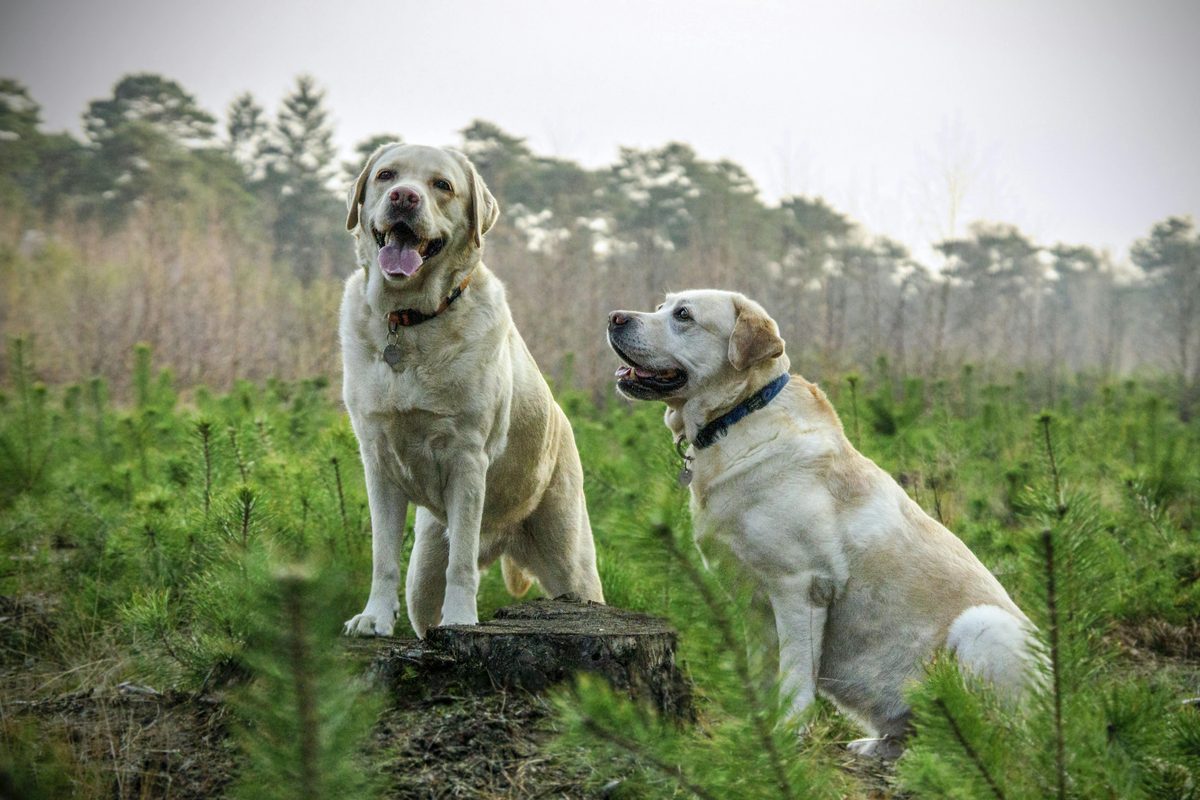
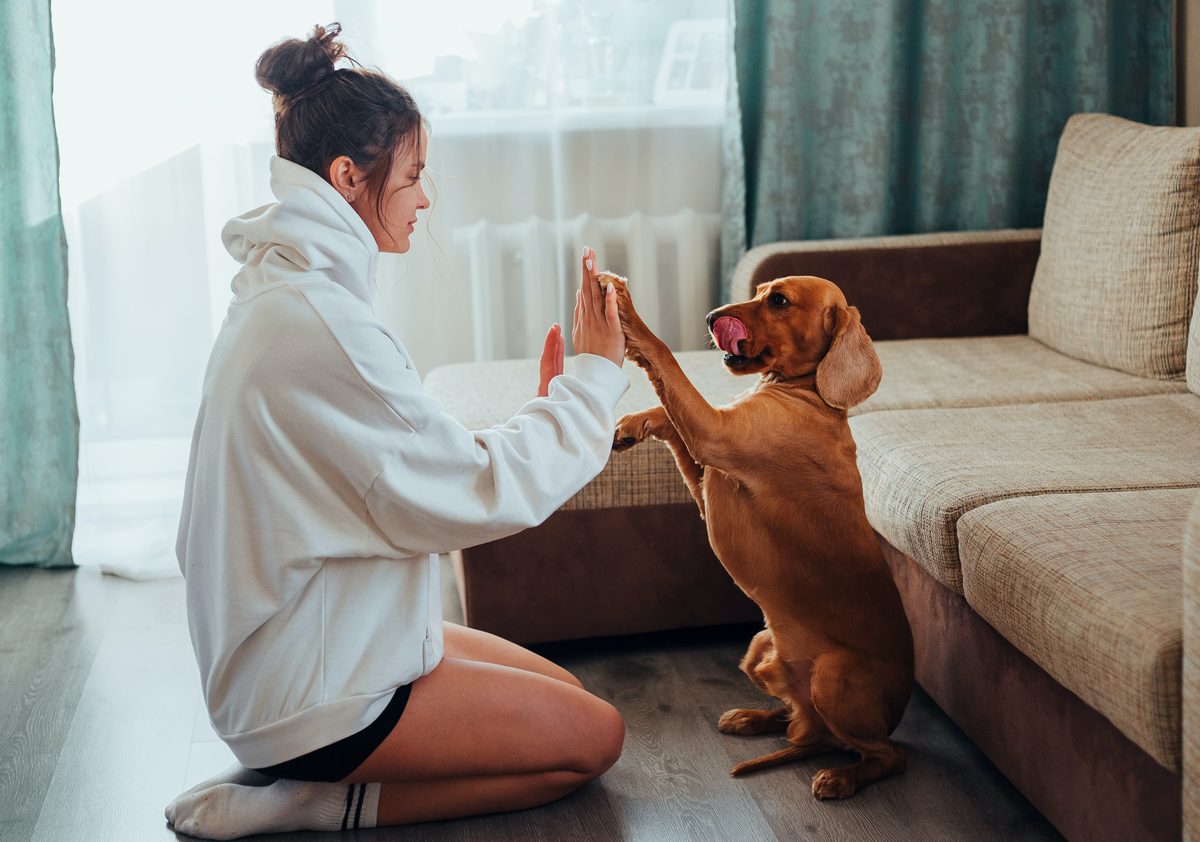
Picture a dog that sits when you ask it to. Waits calmly by the door, doesn't pull on the lead, looks curiously into your eyes when you say 'come here'. Not because it's afraid — but because it understands you and wants to cooperate. That's what well-taught commands give you.
They're like a bridge of understanding — no punishment, no frustration, with joy and trust on both sides.
Why is it worth teaching your dog commands?
Because every dog wants to know what it should do. A dog that knows clear rules and can predict the consequences of its behaviour feels safer and calmer — and that translates into its overall wellbeing. Learning commands isn't just about obedience.
It's an investment in the relationship and the everyday quality of life for both of you.
Thanks to well-mastered commands: it's easier to manage your dog's emotions in stressful situations, walks become more pleasant — without pulling and tugging, everyday situations like crossing the street, guests at home or a vet visit are far less stressful, mutual trust and understanding between dog and owner grows, the dog is safer — especially in situations where it needs to react instantly to your command.
How does teaching a dog commands work? The basics of positive reinforcement
Before moving on to specific exercises, it's worth understanding the mechanism behind effective learning. Dogs learn through association — if something pleasant happens after a certain behaviour, the dog is happy to repeat that behaviour.
That's exactly what positive reinforcement is. A reward isn't a bribe — it's information for the dog that it has just done something right. The faster the dog gets the reward after performing the command, the stronger the association formed.
Ideally, the reward should come within 1–2 seconds of completing the command.
What can serve as a reward? a treat — the fastest and clearest reward, especially early in training; verbal praise — 'yes!', 'good boy!', said in a cheerful tone; play — for dogs that respond more to a ball or tug toy than to food; touch and attention — for dogs for whom contact with the owner is the biggest reward.
Over time, once the dog has mastered a command, you can gradually replace treats with praise — but early in training, a physical reward works best.
Where to start teaching your dog commands?
Before moving on to 'sit' or 'stay', it's worth creating the right conditions for learning. 🐾 Choose one simple command to start with — ideally 'sit'.
It's intuitive, easy to show, and builds the foundation for further learning. 🍗 Prepare treats and praise — small pieces of something your dog really likes.
They don't need to be big — what matters is that they're appealing. 🤫 Start in a calm place — without other dogs, children or distractions.
Only once the dog has mastered the command at home should you gradually introduce more challenging conditions. ⏱ Train briefly but regularly — 3–5 minutes is enough.
End the session when the dog is making progress and is focused — not when it's already tired and making mistakes. 📅 Be consistent — always use the same word for the same command.
If you say 'sit', make sure everyone in the household says 'sit' — not 'sit down' once, 'sit' another time, and 'sit please' a third.
How to effectively teach your dog a new command?
Learning any new command follows the same stages — whether you're teaching your dog 'sit', 'stay' or 'come'.
Step 1: Show the behaviour
Instead of explaining verbally what the dog should do, help it do it physically or with a treat. For 'sit', raise a treat slightly above the dog's head — it will naturally lower its hindquarters and sit.
Step 2: Add the verbal command
Once the dog is already performing the behaviour, add the word — 'sit', 'stay', 'come'. Early in training, the verbal command comes after the behaviour, not before it. This way the dog learns the word as the name for something it already knows.
Step 3: Praise and reward immediately
The reward must come instantly — within a second of completing the command. The faster, the stronger the association.
Step 4: Repeat in different places and situations
A dog that sits in the living room won't necessarily sit right away by the stairwell or out on a walk. Every new place is a new lesson. Gradually introduce more challenging conditions.
Step 5: Gradually reduce rewards
Once the dog confidently performs the command, start rewarding it not every time — but unpredictably. Paradoxically, this reinforces the behaviour, because the dog never knows when the reward will come.
Commands worth introducing first
You don't need to teach your dog an elaborate repertoire right away. Start with a few fundamental commands that genuinely make everyday life easier: 'Sit' — a basic stop and a signal to focus attention.
A good starting point for every dog. 'Stay' — teaches patience and self-control. Key at the front door, when crossing streets, and when guests visit. 'Come' — the most important command from a safety standpoint.
A dog that reliably comes when called is safe even off the lead. 'Place' — useful when you have guests at home, or when you want your dog to lie calmly during a meal or phone call. 'Leave it' — teaches the dog to ignore objects or food on the floor.
It can save its life if the dog finds something toxic. 'No' — a brake on unwanted behaviour. Use it calmly and consistently, always as information, not punishment.
How long does it take a dog to learn a command?
It depends on several factors — the dog's age, character, frequency of practice and training method.
Roughly: 'Sit' — most dogs master it within 1–3 training sessions. 'Stay' — requires gradually extending the time and distance, usually a few weeks of regular work. 'Come' — takes a long time to learn, because it needs to be mastered in different environments and with different distractions.
This is work measured in months, not days. 'Place' — usually a few weeks of consistent practice. Remember that the pace of learning varies between dogs. A puppy may learn faster, but also has a shorter attention span.
An older dog learns more slowly, but is usually calmer and less distracted.
What to do if your dog doesn't listen to you?
A lack of response isn't defiance — it's feedback. Before you get discouraged, ask yourself a few questions: Does the dog really understand what you expect? It might need more time to consolidate the command under simpler conditions. Is it tired or stressed?
A dog in a state of high arousal or fatigue simply isn't able to focus — that's not a matter of good will. Are the rewards appealing enough for it? A piece of dry kibble is enough motivation for one dog, while another needs something more enticing. Are you using too many words?
A short, clear command works better than a full sentence. Are you being consistent? A dog that can sometimes ignore a command without consequences quickly learns that it's optional.
5 most common mistakes when teaching commands
FAQ — teaching a dog commands
From what age can you teach a dog commands?
You can start teaching from around 8 weeks of age — puppies are very receptive at that stage and pick up new things quickly. Short, playful training sessions are ideal for young dogs. Older dogs also learn well — the saying that 'you can't teach an old dog new tricks' is a myth.
Does a dog need to be hungry to respond well to treats?
Not necessarily hungry, but not full either. Training is best done before a meal, when the dog is motivated by food. If the dog has just had a big meal, treats may not interest it enough.
How long should one training session last?
3–5 minutes for puppies, 5–10 minutes for adult dogs. Several short sessions a day give better results than one long one. Always end the session on a positive note — when the dog does something well, praise it and stop the exercises.
What to do when a dog gets distracted during training?
Go back to the previous stage — a simpler environment, a shorter distance, a shorter waiting time. Distraction is a sign that the training is too difficult for the dog's current level. Lower the demands and gradually build the difficulty back up.
Commands aren't tricks for show — they're a shared language that makes everyday life easier and builds a relationship based on understanding. A dog that knows commands is calmer, safer and happier. And so are you.