Guiding these encounters well helps head off behavioural problems, builds your dog's confidence, and deepens its trust in you. The rest of this article is about how to do exactly that, calmly and without pressure.
Why do calm social interactions matter so much?
For a dog, a walk isn't just a moment to relieve itself or burn off energy.
It's also a very important moment of contact with its surroundings and of learning to function among people, dogs and new stimuli. 🐶 Properly guided interactions help: build a dog's confidence, reduce stress and frustration, develop calm reactions, strengthen the relationship with the caregiver, prevent behavioural problems.
Many walking difficulties stem precisely from over-excitement, a lack of emotional control, or overly intense social interactions.
Choose calmer places and appropriate walk times
5 rules for calm interactions between your dog and other dogs and people
Don't force contact
Not every dog wants to approach strangers or other dogs. Sometimes calmly passing at a distance is far more valuable than a forced interaction.
Watch your dog's body language
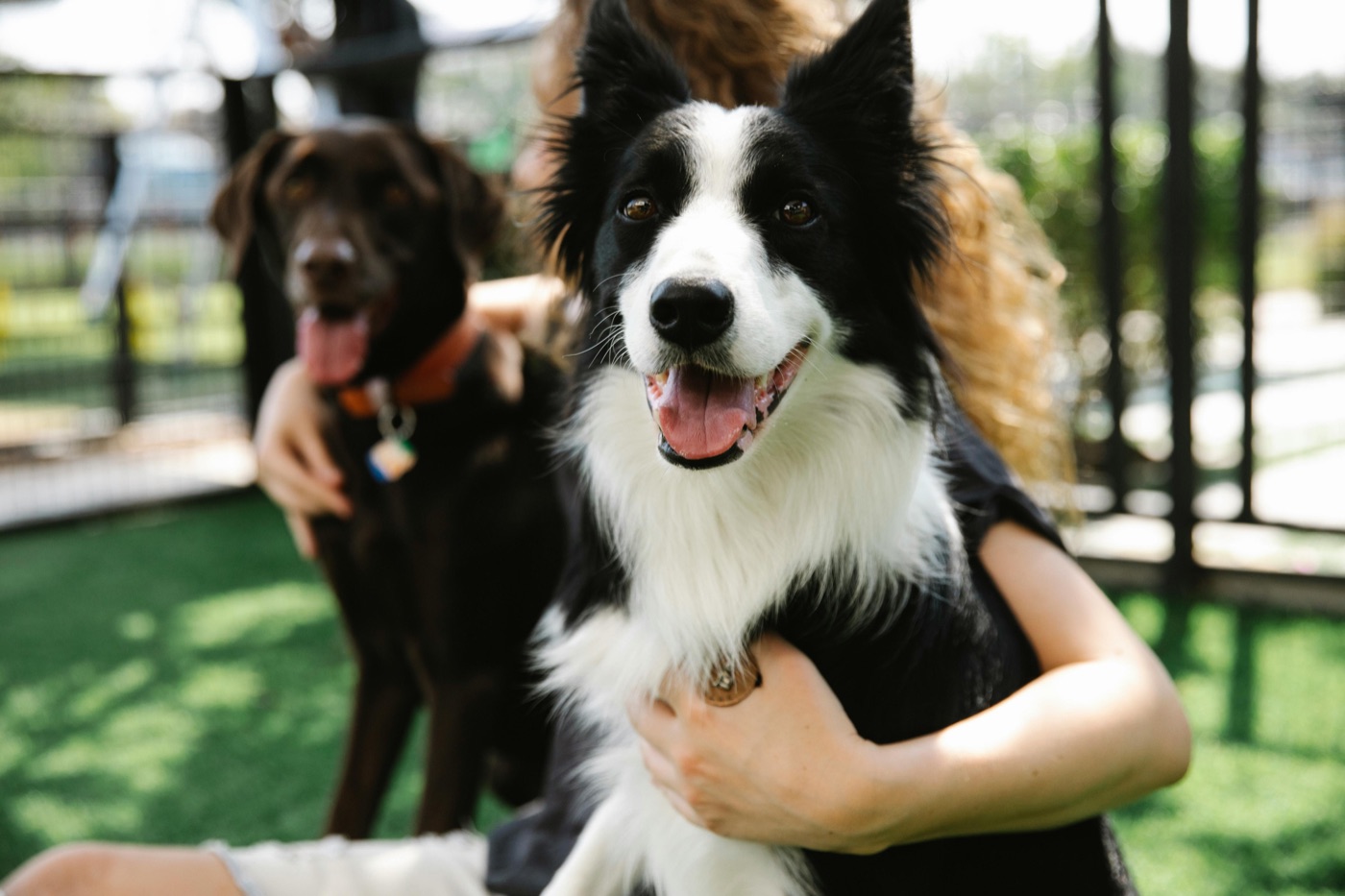
Yawning, licking the nose, a stiffened body or turning the head away can signal stress or discomfort. The sooner you notice signs of tension, the easier it is to help your dog stay calm.
Reward calm behaviour
Reinforce your dog for calmly passing by, making eye contact with you, or ignoring other dogs. This builds good associations and teaches your dog the right reactions.
Don't let it run up to every dog
Not every dog likes contact with unfamiliar dogs. Controlled, calm meetings are much safer than spontaneous approaches without the other caregiver's consent.
Keep your own calm
Dogs react very strongly to human emotions. A calm voice, a loose lead and composure help a dog feel safer even in more difficult situations.
Do dogs always have to play with other dogs?
Do you have a problem with walks or your dog's reactions?
If your dog: gets stressed during walks, pulls toward other dogs, barks at people or dogs, has trouble calmly passing others, gets excited quickly, it's worth working on this gradually and without pressure.
FAQ — common questions about a dog's contact with other dogs and people
Does every dog have to like other dogs?
No. Just like people, dogs have different characters and social needs. Some love playing with other dogs, while others prefer calm walks without contact.
Should a dog greet every dog it meets?
There's no need for that. In fact, calmly passing other dogs is a far more important skill than constant interaction.
What should I do if my dog is afraid of people or other dogs?
The most important thing is not to force contact. It's worth working gradually, with appropriate distance and calmly reinforcing positive experiences.
Why does my dog pull toward other dogs?
This is usually due to excitement, frustration or a lack of skill in calmly passing by. It's worth practising focus on the caregiver and calm observation of the surroundings.
Is play with every dog good for socialisation?
Not always. Overly intense or uncontrolled contacts can lead to stress and negative experiences. The quality of interactions matters, not their quantity.
How can I tell my dog feels uncomfortable?
Signs of stress can include: licking the nose, yawning, turning the head away, a stiffened body, a tucked-in tail, avoiding contact.
Well-guided social interactions help raise a calm and confident dog. What matters most is patience, observing the dog's emotions, and consciously building positive experiences. 🐶 It's not about the dog loving everyone around it.
What matters most is that it can function calmly among people and other dogs without excessive stress or frustration. Every walk is an opportunity to learn, build the relationship, and strengthen trust between dog and caregiver.