- Adult dogs: several outings rather than two hours of nonstop running.
- Puppies and seniors: a plan based on development, health and veterinary advice.
- After walks: a chance to rest quietly without an endless stream of tasks.
How many daily walks does an adult Shepherd need?
Rather than one very long outing, plan several opportunities for movement during the day. For many owners, three walks of different lengths work well, with an extra short toilet trip if the dog needs one. The number of walks is not a fixed rule for every dog of this breed.
Distinguish time outdoors from strenuous exercise. Half an hour on a quiet route with pauses is a different load from half an hour chasing a ball. Avoid comparing your dog’s day with your neighbour’s distance tracker alone. Instead, note what you did and how your dog rested afterwards.
An example day: three walks totalling around two hours
This is an example outing schedule for a healthy adult dog accustomed to this activity level. Walks may vary in pace and include sniffing pauses. The 120 minutes refer to outings; allow additional time for sleep and activities at home. Adjust for health, fitness and weather rather than following the schedule at any cost.
- Morning: a 45-minute walk with sniffing time and a few easy recall exercises.
- Midday: a relaxed 30-minute outing along a familiar route.
- Evening: a 45-minute walk including a brief game or a simple scent task.
- Between outings: rest and sleep, with toilet breaks as often as the dog needs them.
You do not need to fit every exercise into every walk. On a crowded street, concentrate on a calm passage and save training for an easier setting. For a longer weekend outing, consider your dog’s existing fitness and make sure you can turn back early.
Make room for sniffing and learning
A Shepherd needs more than an ever-faster walking pace. Offer a task with a clear start and finish, such as finding a toy or coming when called in a quiet place. You can finish after a few successful repetitions, before the dog loses interest. The entire walk need not become a continuous obedience test.
Prepare two or three simple activities you both know. One day, practise calmly passing people; another day, search for a toy. Use these to vary your time together. There is no universal conversion that makes a few minutes of sniffing equal a particular number of kilometres.
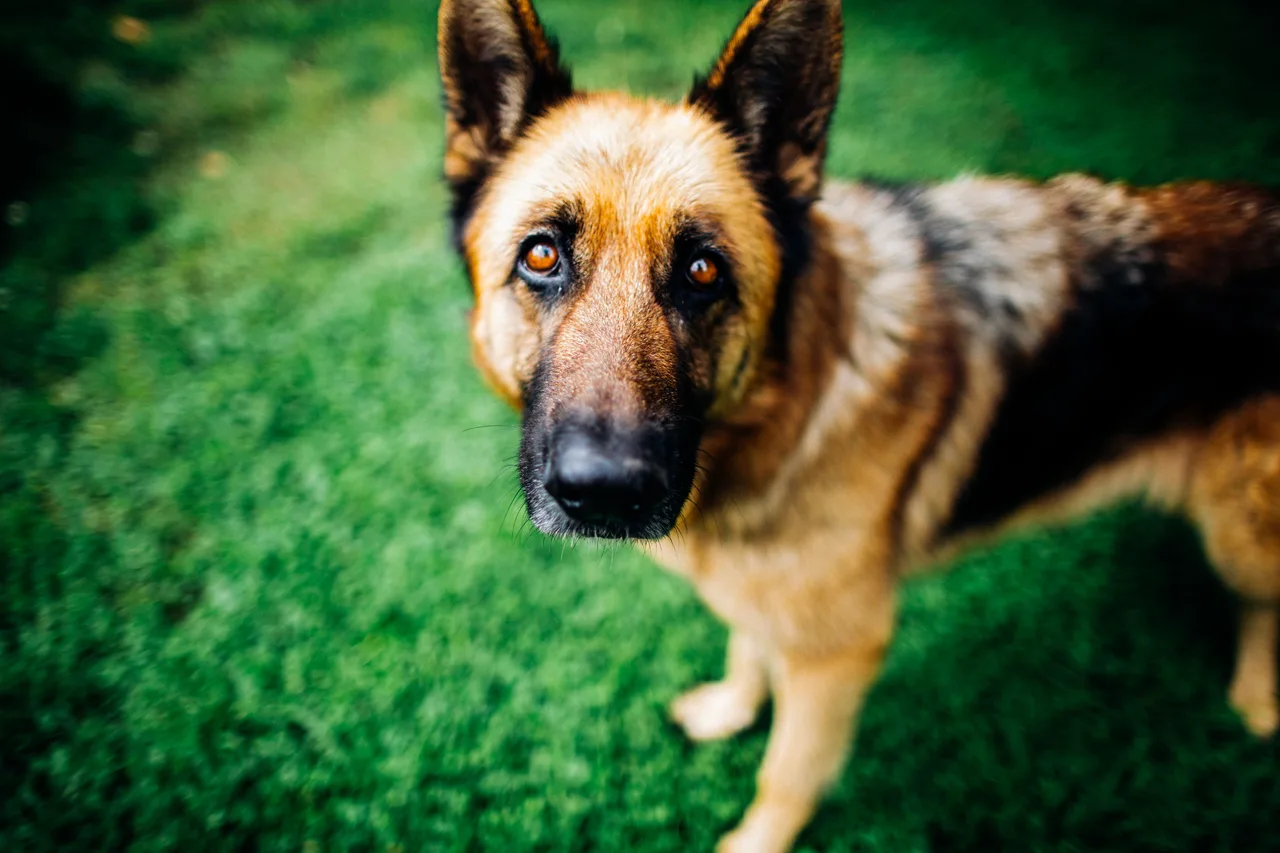
How much exercise does a German Shepherd puppy need?
A puppy should not follow an adult dog’s routine. PDSA recommends short, development-appropriate activities and avoiding strenuous running or jumping while growing. The popular “five minutes for every month of age” rule is not scientifically established as a universal limit.
Plan an outing that is easy to end. A short route close to home avoids a long return journey for a tired puppy. Discuss safe exploration during the vaccination period with your vet, along with when to introduce more demanding activities.
How should walks change for an older or unwell dog?
An older dog needs an individual plan. If there is pain, a joint condition or recovery after surgery, agree the duration and type of activity with a vet. Age alone cannot tell you how many minutes are suitable. Nor should you automatically apply one unwell dog’s instructions to another.
A simple diary can help: route, outing duration, behaviour afterwards and any difficulties. Take it to the consultation. Instead of saying “perhaps the dog wants to walk less”, you can show when the problem appears and what has changed in the routine.
How can you tell whether exercise is too much or too little?
Restlessness at home is not, by itself, proof of insufficient exercise. Before extending walks, look at the whole day, opportunities to rest and what happens before the dog becomes agitated. If behaviour has changed or is difficult to understand, consult a vet or a behaviour professional.
Increase the load gradually. In hot weather, use cooler times of day, carry water and reduce exertion. Repeated explosive starts, stops and jumps after a ball should not form the basis of the daily routine, especially for a dog with mobility problems.
Can a garden replace a walk, and what about workdays?
A garden can provide space for a toilet break or a game together, but opening the door is not an activity plan. Decide who takes the morning walk, who can help at midday and what happens in the evening. That is easier to sustain than trying to make up for the whole day with one intense outing.
If you use dog walking with Alvis, tell your sitter how to pass other dogs, which cues you use, what equipment is needed and any health restrictions. Demonstrate the usual route on an introductory walk. For more planning advice, read our guide to dog walk duration.
Common questions about Shepherd activity
Is one hour of walking a day enough?
For many healthy adult Shepherds, it will be less than they need. Consider total activity and health, though; do not apply adult breed guidance directly to a puppy or a dog recovering from illness.
Does a German Shepherd have to run every day?
No. Daily sprinting is not a requirement. You can build a routine around walks and varied activities, introducing running only after checking health and building fitness.
Can a German Shepherd live in a flat?
Floor space alone does not describe a dog’s life. Before deciding, write out a realistic week of care, outings and rest. Neither a garden nor a large house replaces a person’s time and involvement.
Based on
PDSA — German Shepherd; Exercising your dog; Exercising your puppy. The daily schedule is an editorial example, not an individual veterinary prescription.