Is my dog ready to run?
Before starting regular runs, discuss your dog's age, development, body condition, breathing and movement with your vet. A puppy should not follow an adult runner's programme. Dogs with breathing limitations, pain or excess weight may need a different activity. There is no single birthday when every breed and individual becomes ready for the same distance.
Equipment: harness, line and belt
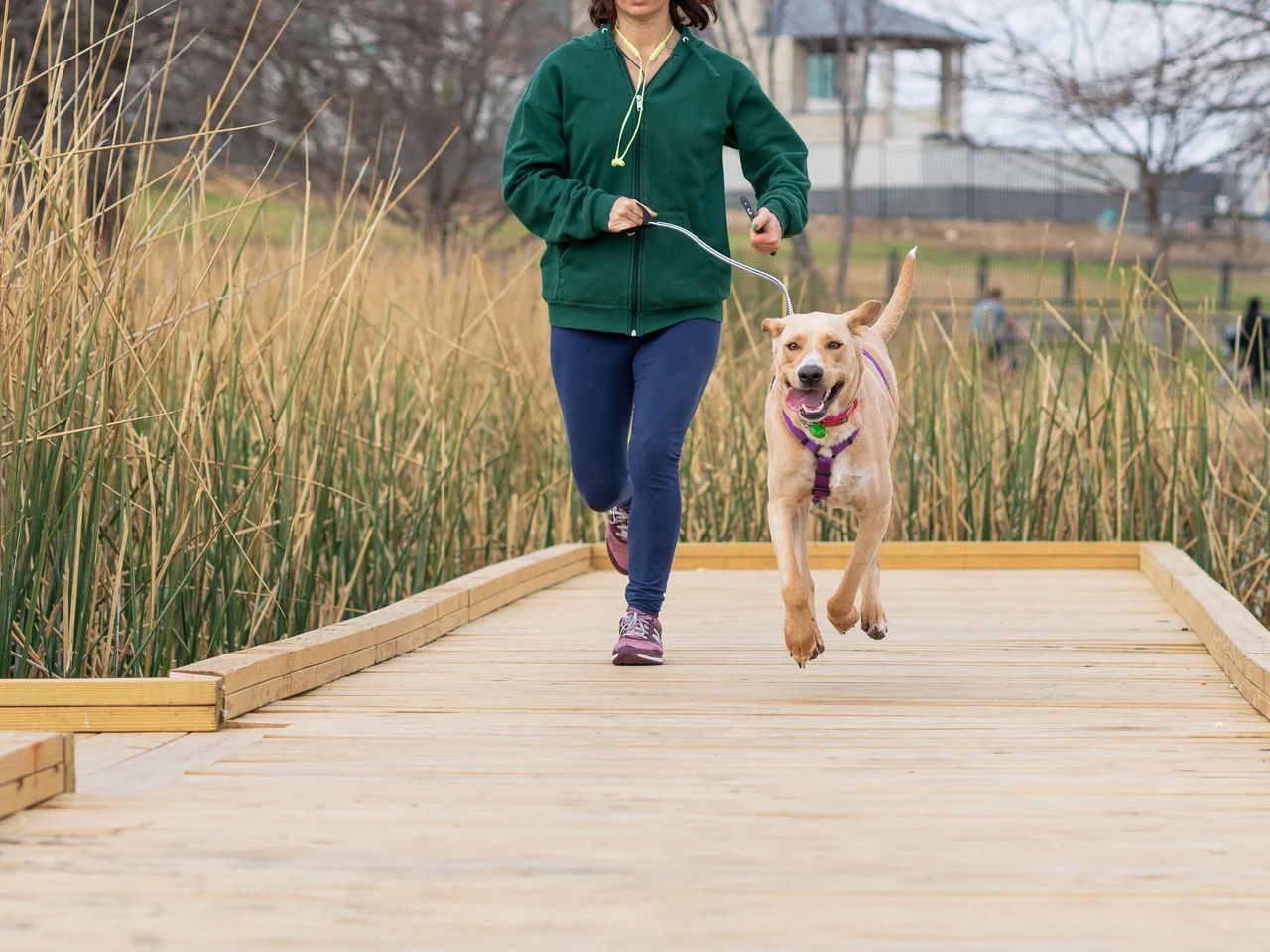
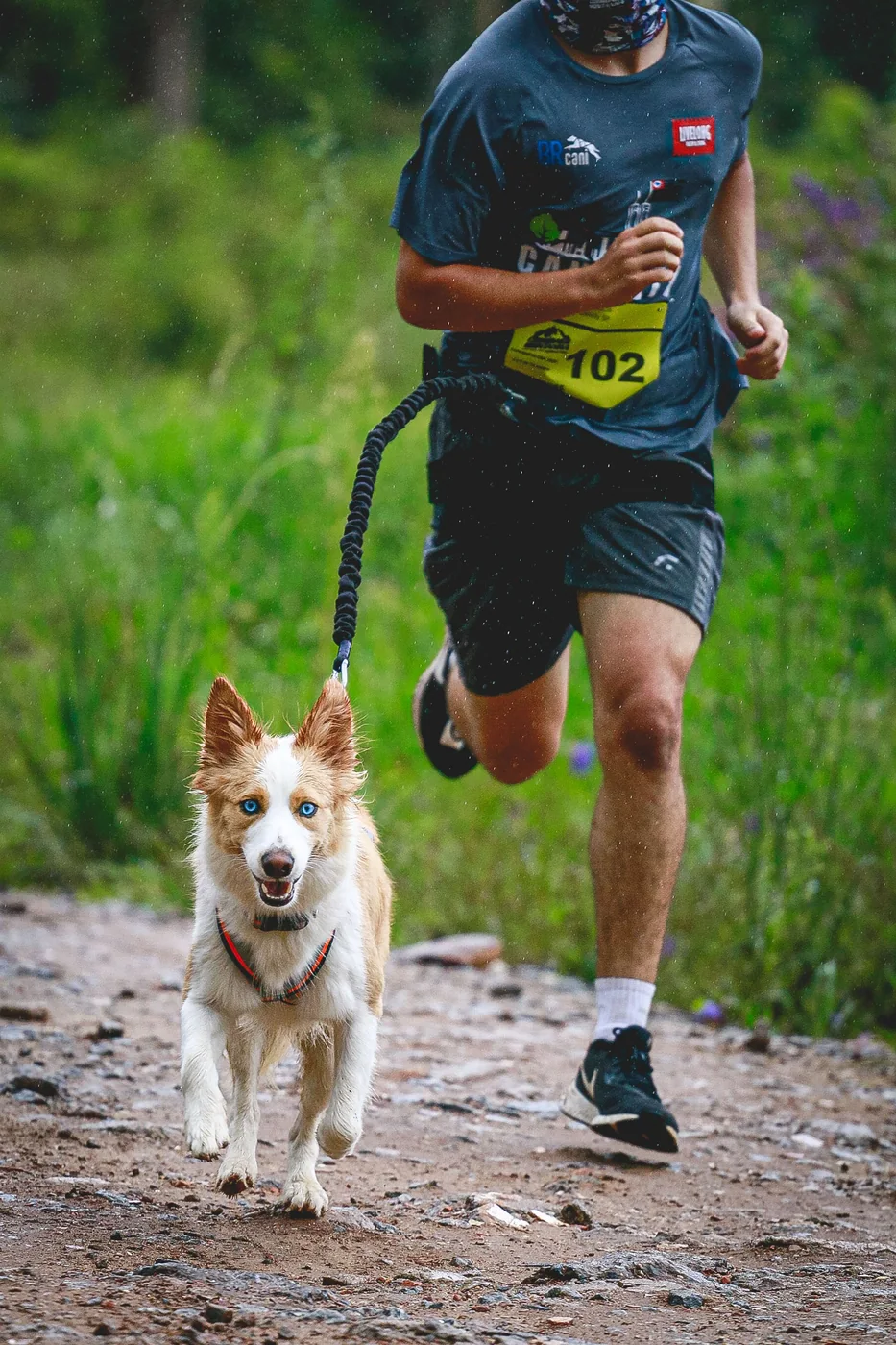
- A harness matched to the activity: pulling requires one designed for that work. Check fit under tension and freedom of movement, ideally with an experienced instructor.
- A bungee line suitable for canicross. It should reduce sudden jolts; do not use a retractable lead or a collar as the pulling attachment.
- A running belt fitted to your body and running style. Practise using the whole setup while walking before increasing speed.
- Water, a collapsible bowl, waste bags, identification and a phone. Also plan how to get back if your dog cannot finish the route.
First sessions without chasing a result
Choose a familiar, quiet loop with shortcuts. Start with walking and sniffing, then alternate brief stretches of easy jogging with walking. Do not increase pace, distance and terrain difficulty together. Finish while your dog is still moving comfortably, rather than waiting for refusal to continue. Include recovery between sessions.
Cues and passing other trail users
Practise starting, slowing, stopping and changing direction separately at walking pace. Reward calm responses without jerking the dog. Slow down and leave space before passing a person, bicycle or another dog. Do not let the line cross other people's path.
If your dog becomes increasingly excited, return to an easier walk rather than trying to solve the situation by running faster.
Weather and reasons to stop
Heat and high humidity increase overheating risk; skip the run in those conditions. Check the ground, shade and drinking opportunities. Slowing down, limping, seeking shade, unusual breathing or poor coordination mean you should stop. If overheating is suspected, begin cooling and urgently contact a vet. Do not force your dog to finish the planned loop.
A brief note after training
- Record the route, conditions and surface so you can compare the next attempt in a similar context.
- Check for harness rubbing and whether your dog still moves comfortably after resting.
- Note tense moments, passing encounters and situations worth practising separately on walks.
- Pause training and arrange a consultation for recurring stiffness, pain or reluctance to move.
Frequently asked questions
Can a small dog do canicross?
Size alone does not decide. Health, physical build, readiness for exercise and equipment fit matter. Do not judge ability solely by breed.
Can a dog run while attached to a collar?
For pulling work, choose a suitable harness rather than a collar. Ask an instructor to check the setup, especially when starting out.
Does every walk need to become training?
No. Dogs also need rest, relaxed sniffing and calm exploration. Running is one possibility, not a requirement.