What to look for on a dog food label
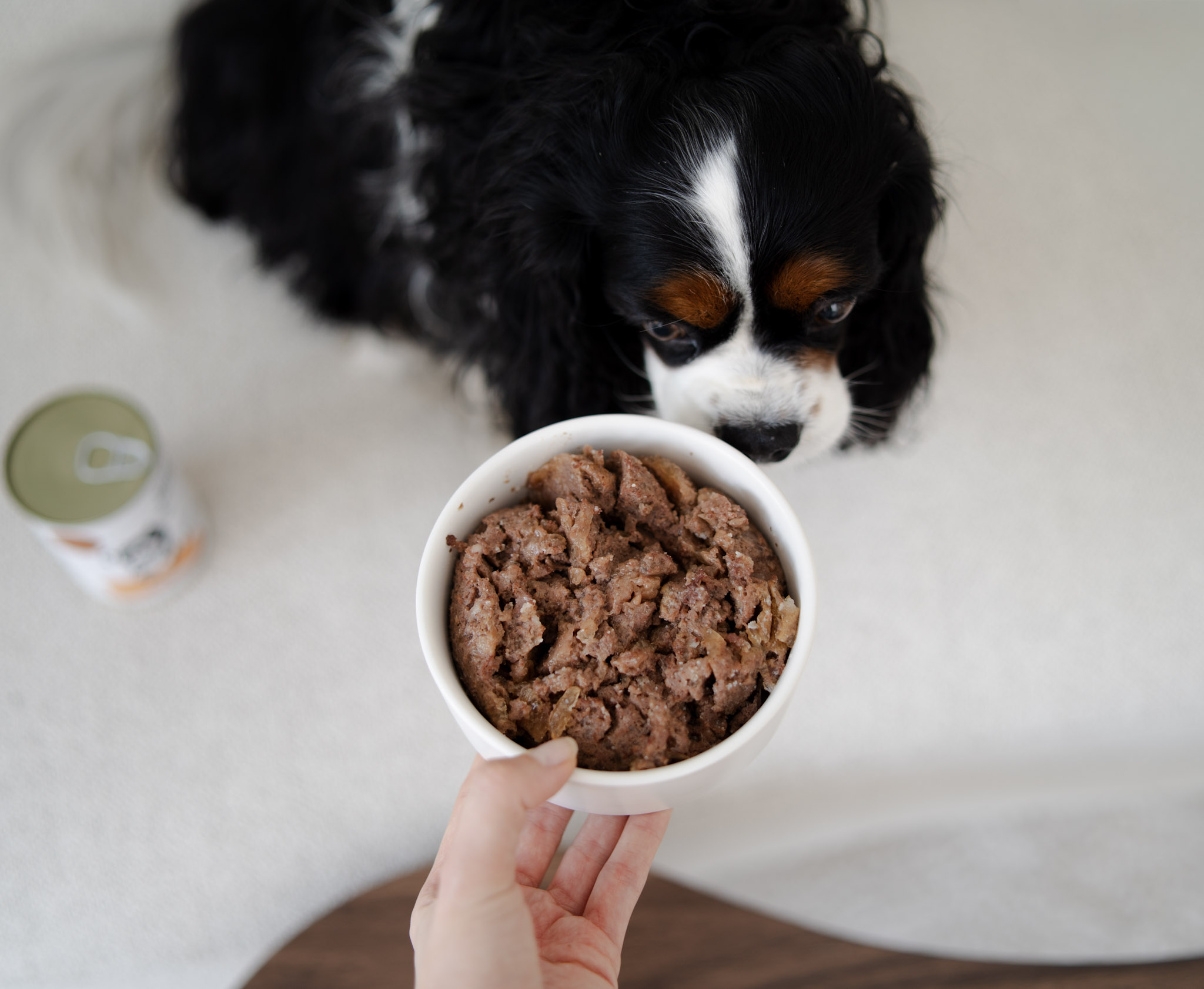
In Poland, look for “karma pełnoporcjowa dla dorosłych psów”, meaning complete food for adult dogs. Fed in suitable amounts, it supplies the nutrients a healthy adult dog needs. A very similar tin may say “karma uzupełniająca”, or complementary food. That pâté is meant to go alongside a complete diet and won’t cover all your dog’s needs on its own.
Turn the pack over. Can you find a daily feeding guide, the calorie content or a number to call for more information? If you’re comparing brands, ask who formulates the food and how the company checks the finished product. A word like “premium” on the front tells you little about either.
Dry food, wet food or home cooking?
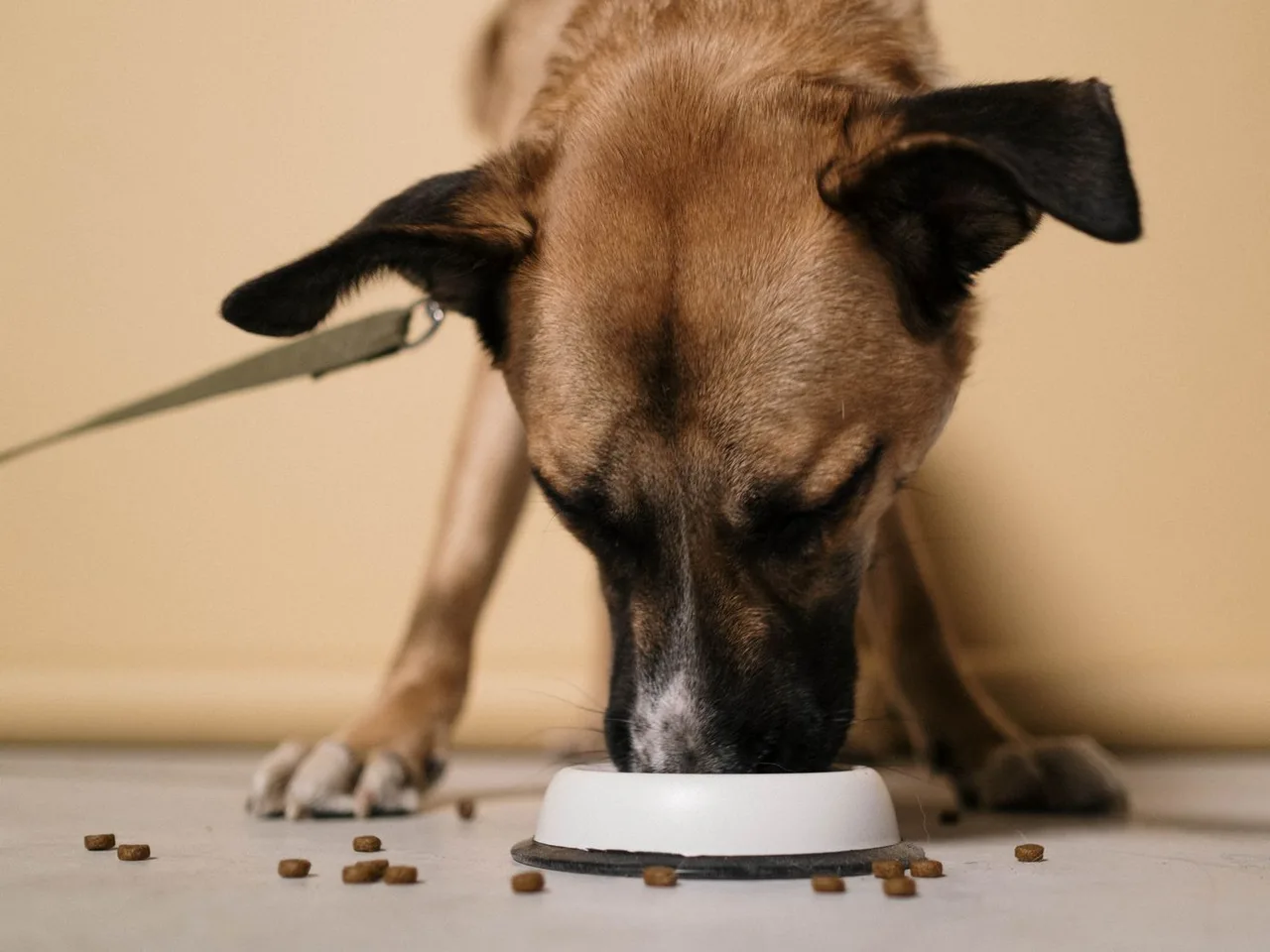
Kibble is easy to weigh in the morning and slip into a treat pouch for a walk. Wet food contains more water, so a serving with the same calories usually takes up more room in the bowl. Cover and refrigerate opened tins and check the label for how soon to use them. Keep fresh drinking water available whatever you feed.
If you prefer to cook, ask a veterinary nutritionist for a recipe tailored to your dog. Chicken, rice and carrots might make a popular dinner, but looking at the bowl won’t tell you whether it contains enough calcium.
A balanced home-cooked recipe specifies ingredient weights, preparation and any supplements the dog needs. Check with the nutritionist before making substitutions.
How much food does your dog need each day?
Start with the guide on the pack and weigh the daily amount on kitchen scales. If your vet has already worked out a portion, use that. Keep an eye on both weight and body shape.
In a dog in ideal condition, you can usually feel the ribs easily under a thin covering of fat and see a waist behind them from above. Use your hands with a thick-coated dog. An unexplained change in weight is worth discussing with your vet.
You can feed wet and dry food together. Suppose the full daily allowance for your dog would be 200 g on dry food alone or 600 g on wet food alone. For half the day’s energy from each, serve 100 g of the dry and 300 g of the wet over the whole day. Those weights are an example.
Use the calorie information or mixed feeding guide for the foods in your own cupboard.
How often to feed and where treats fit in
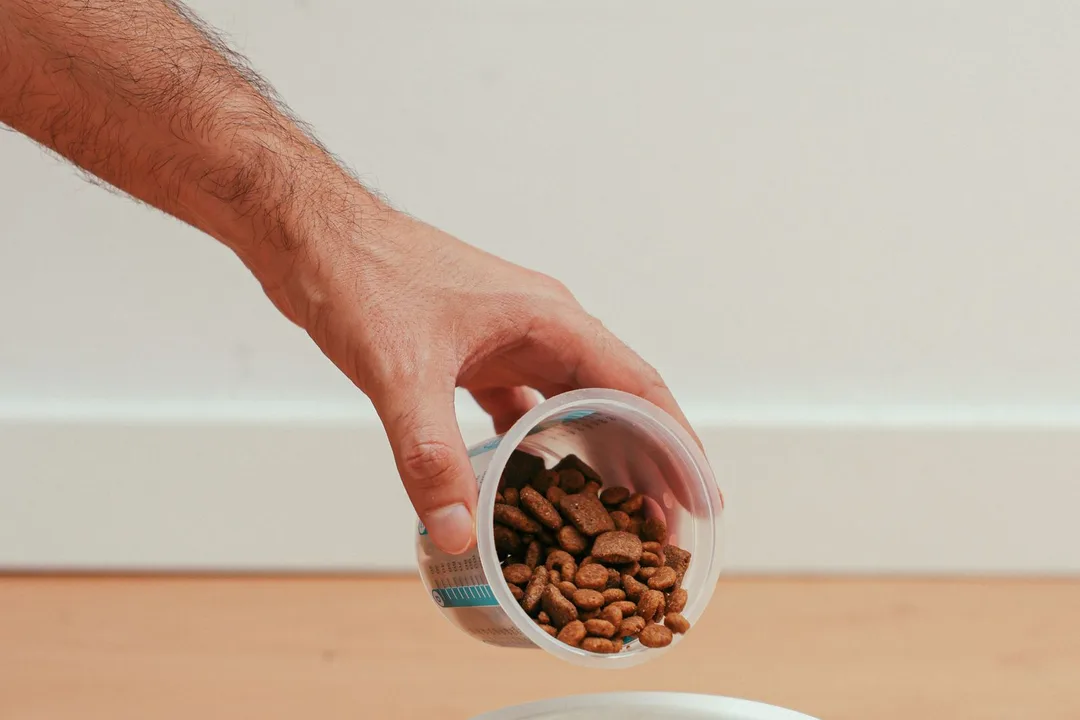
Many healthy adult dogs do well with two meals at roughly the same times each day. Weigh the daily allowance once and divide it between breakfast and dinner. If several people feed your dog, keep the day’s food in one container. It settles the question of whether someone has already served lunch, however convincing the dog looks.
Keep treats and extras to at most 10% of daily calories. Count edible chews, scraps of cheese and training rewards together. For a dog who needs 500 kcal a day, that leaves up to 50 kcal for all those extras. For recall practice you can also set aside some kibble from the day’s measured portion.
How to switch to a new dog food
Buy the new food while you still have about a week’s supply of the old one. For the first couple of days, replace roughly a quarter of the old daily allowance with a quarter of the new one.
Move to half and half, then three quarters new food, and finally the new food alone if appetite and stools remain normal. Measure each fraction against that particular food’s full daily allowance.
Dogs with sensitive digestion may need a slower change. Call your vet if vomiting recurs, diarrhoea persists or your dog seems unusually weak. When starting a prescription diet, ask your vet for a transition plan and check which treats can stay on the menu.
Questions dog owners ask about feeding
What if my dog suddenly refuses a meal?
Make a note of the last normal meal, whether your dog is drinking and how they seem otherwise. Contact your vet if they keep refusing food. Call immediately if they are vomiting, lethargic or in pain. If your dog takes insulin, speak to the clinic before the next dose.
Can my dog eat the cat’s food?
Choose food formulated for dogs for everyday meals. If your dog keeps finishing the cat’s dinner, feed them in separate rooms and pick up the bowls afterwards. That way you can see both how much the dog ate and whether the cat finished.
Which foods from the kitchen are dangerous for dogs?
Chocolate, grapes, raisins, onions, garlic and products containing xylitol can harm dogs. If your dog eats any of these, call a vet straight away. Have the packet, approximate amount, time and your dog’s weight handy. Don’t induce vomiting unless a vet instructs you to.
When should I move a puppy onto adult food?
The right time depends on when growth is complete. Small and large dogs mature at different ages. Ask your vet about timing, especially for a large-breed puppy. Until then, use a complete growth diet suited to your puppy’s expected adult size.
Does a dog eating complete food need extra vitamins?
A healthy adult dog eating an appropriate complete food will usually already get the nutrients they need. Before adding a supplement, show your vet the food label and list everything else your dog eats. This is especially important for mineral supplements and prescription diets.