Why brushing matters
Bacterial plaque builds up on teeth. Regular brushing helps remove it before it mineralises into tartar. Home care does not replace an oral examination or treatment for periodontal disease. A dog that still eats normally may nevertheless have painful dental problems.
Do not scrape hard deposits off with household tools. Your vet decides whether professional cleaning and an examination under anaesthesia are needed.
Choosing a brush and toothpaste
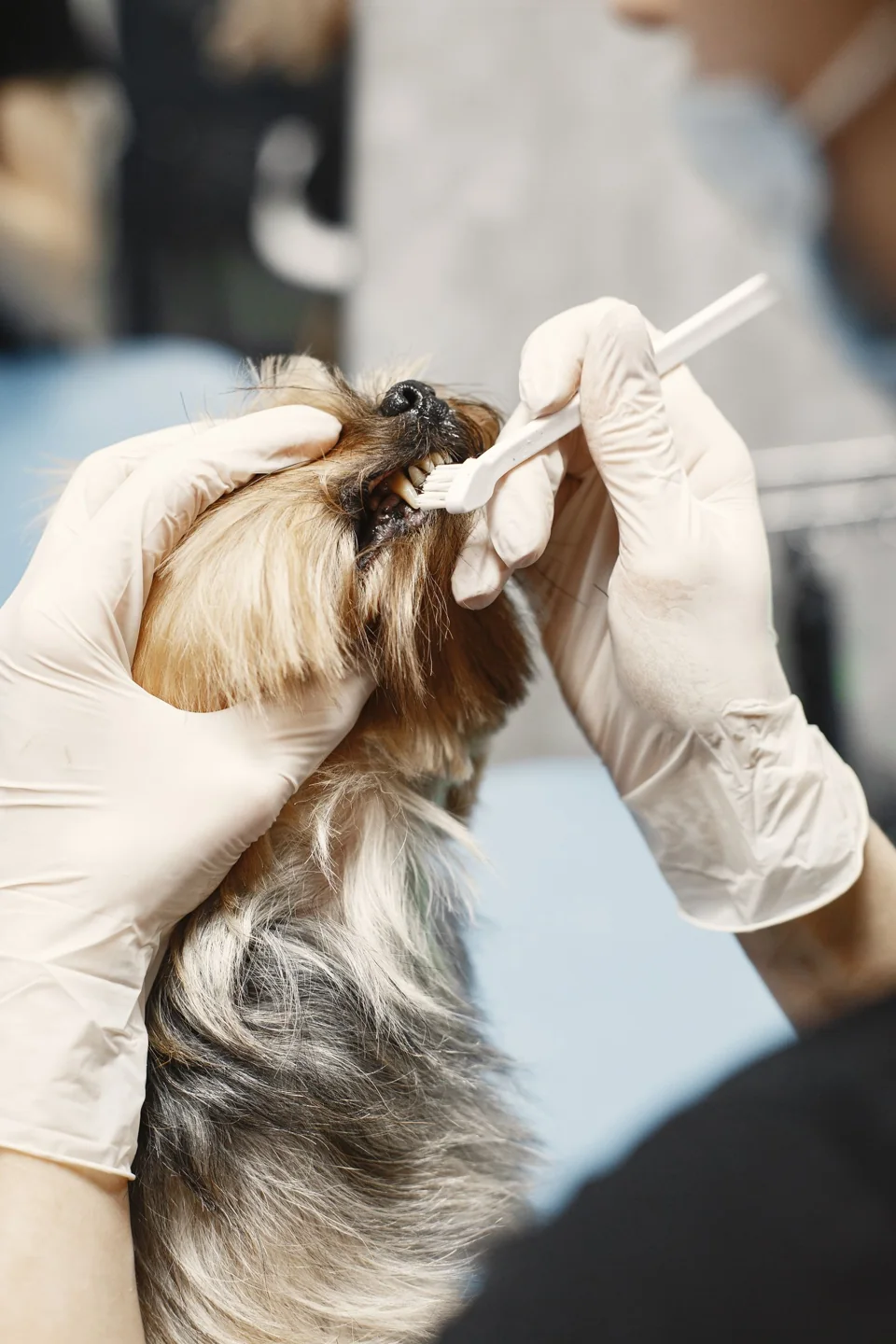
The brush head should fit comfortably between the cheek and teeth. A large head that is difficult to turn makes gentle movement harder in a small mouth. Soft bristles and a handle you can control matter more than extra features. A finger brush does not protect against bites: if your dog grabs your hand or rejects touch, do not put it in their mouth.
Check that the toothpaste is intended for dogs, then read its ingredients and instructions. Discuss flavourings and ingredients with your vet if your dog has dietary restrictions. Start with a small pack. Avoid changing the brush, paste and location at the same time when you are trying to discover which part your dog dislikes.
Prepare before your first attempt
- A soft brush sized for your dog’s mouth; ask your vet to demonstrate how to use it.
- Dog toothpaste in a flavour your dog accepts. Do not use human toothpaste or baking soda.
- A quiet place with secure footing and room to move away. Do not start when the dog is asleep, overexcited or guarding food.
- A reward that fits the diet and time for several brief attempts instead of one long procedure.
An example of gradual introduction
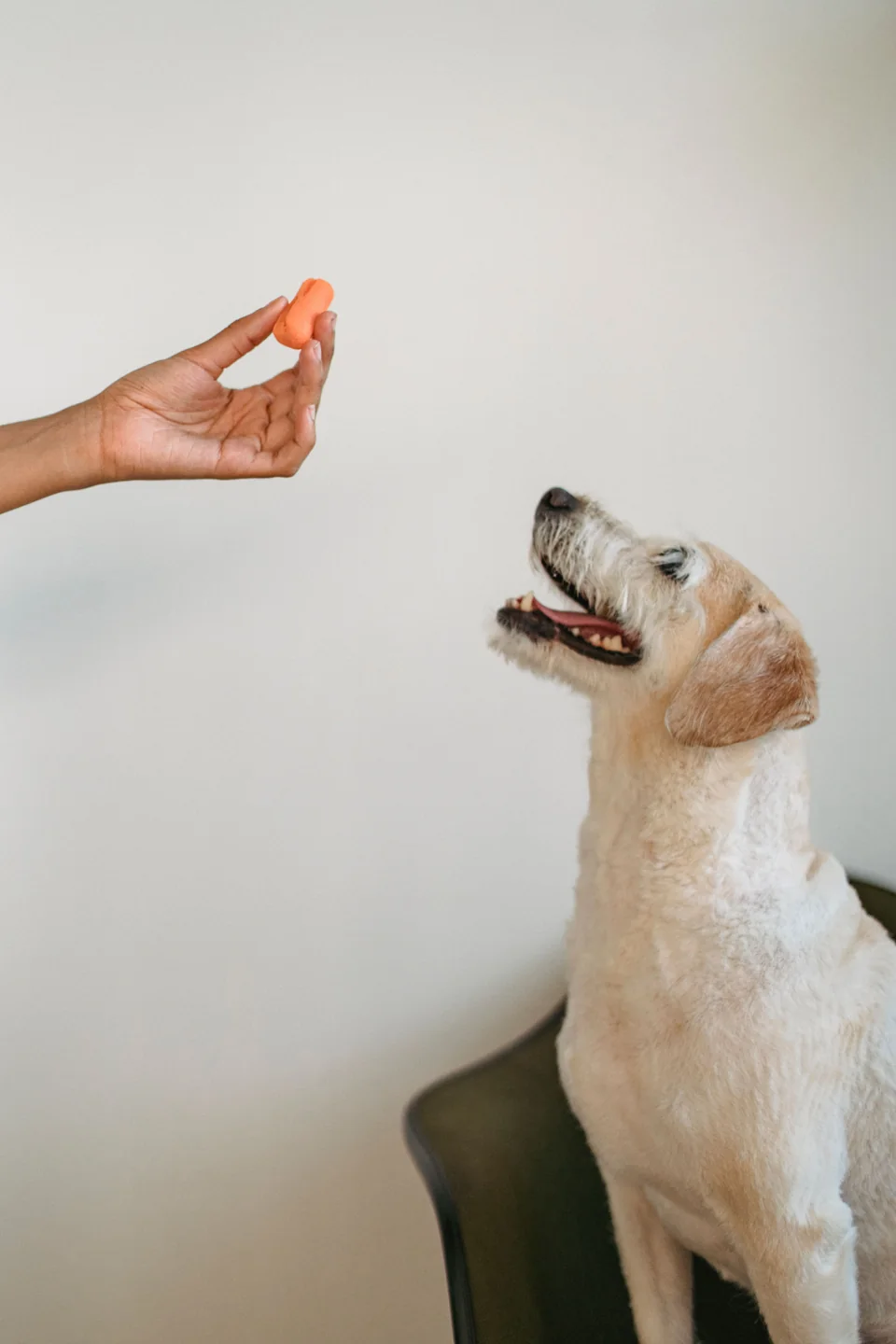
The first attempt might simply involve showing the brush at a distance and rewarding a calm response. Next time, introduce the smell of the paste without opening the mouth.
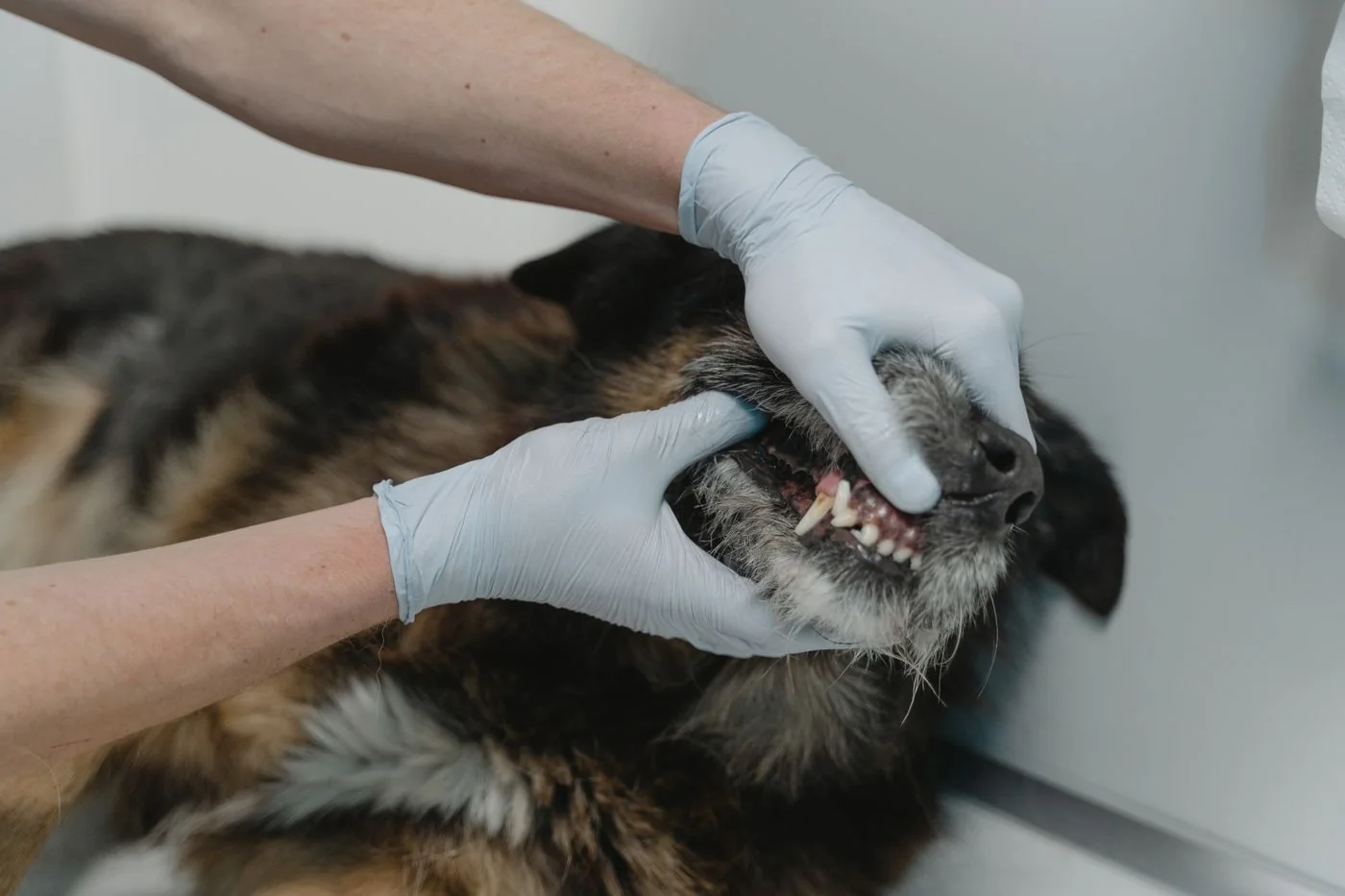
Practise a brief cheek touch separately, then lifting the lip, and only later touching one accessible tooth with the brush. This is an example of a sequence, not a schedule to finish in one day.
Pause after each small step and notice whether your dog chooses to remain beside you. If they walk away, allow a break. Begin the next attempt with an accepted step rather than the action that caused resistance. A note such as “comfortable with lip lifting, not yet comfortable with the brush” is more useful than “will not let me brush”.
Introduce handling before the brush
First reward your dog for resting comfortably beside you. Briefly touch a cheek, then remove your hand. When this is easy, gently lift the lip. Introduce toothpaste and the brush only once these steps are comfortable.
Progress according to your dog’s response, not a calendar. Turning away, stiffening and trying to leave mean make the task easier. Growling is a warning: do not punish the dog or put your fingers inside its mouth.
Avoiding common brushing mistakes
Do not aim for perfect cleaning in one long session. Extra pressure cannot replace regular care. Nor should you start with the hardest teeth to reach when your dog has only accepted a lip touch so far. Move gently and initially focus on the outer surfaces; ask your vet to demonstrate how to reach further back safely.
Rinse the brush after use and let it dry. Each dog should have their own. Check for damaged bristles or a chewed handle. Preparing everything before inviting your dog over avoids holding them with one hand while hurriedly searching for toothpaste with the other.
An attempt that ends calmly is better than another struggle that makes tomorrow’s brushing more difficult.
Brush one step at a time
- Apply a small amount of dog toothpaste following the product instructions.
- Lift the lip without forcing the mouth open. Begin with a few accessible teeth.
- Gently clean the outside surfaces along the gum line. Avoid vigorous scrubbing.
- Gradually include more teeth and both sides while your dog stays comfortable. Ask your vet to tailor the technique to your dog.
- Finish before your dog loses patience. Reward cooperation and return to the routine the following day.
What to do when you get stuck
Does your dog lick the paste but move away from the brush? These are separate skills: return to a brief introduction to the tool without trying to clean a whole side. Do they reject even a cheek touch? First discuss possible pain with your vet.
After dental treatment, ask the treating vet when and how to restart home care during healing rather than following a general guide.
Bleeding is not a necessary stage of “toughening up” the gums. Stop and discuss the symptom instead of applying more pressure. If resistance increases or there is a bite risk, ask for an individual safe-care plan. Do not substitute random mouthwashes, essential oils or human products, even if an online description promises rapid tartar removal.
What if your dog will not let you brush?
If previously accepted handling now causes avoidance, dropped food or chewing on one side, arrange an examination. Do not assume stubbornness. Persistent bad breath, red or bleeding gums, a broken tooth and swelling need veterinary assessment.
Dental chews, diets and products can complement care, but not all have evidence of effectiveness. Ask about products evaluated by VOHC. Choose an appropriate size and follow directions; very hard objects can damage teeth.
Keeping the routine when you go away
Link brushing to a predictable, calm part of the day rather than a rushed moment before going out. Keep the equipment together and record what your dog accepts. If you miss a day, return to the normal routine; do not compensate with a double-length, vigorous scrub.
Judge progress by comfortable cooperation and consistency, not just the appearance of the front teeth.
When handing over care, demonstrate the routine if your dog is comfortable. Agree whether the sitter will continue familiar brushing or pause it during the stay. Record the product, accepted handling and veterinary contact.
Leaving a brush in the bag does not itself mean the procedure has been agreed. Your dog’s mouth still needs periodic veterinary assessment.
Frequently asked questions
How often should I brush my dog’s teeth?
Daily if your dog tolerates it. A short, relaxed introduction to the brush is a valid starting point; do not force a complete clean on day one.
Will brushing remove tartar?
It will not safely remove established tartar. Discuss the teeth with your vet; brushing mainly helps control plaque.
Can a pet sitter continue the routine?
Agree this beforehand, demonstrate the familiar method and provide your dog’s own equipment. Stop if there is pain or resistance; a sitter does not replace a vet.