Before stepping onto the beach
Check the beach operator’s current rules, entrance signs, seasonal restrictions and lead requirements. The neighbouring town may have different rules. Check water quality and lifeguard warnings; a swimming ban is a reason to stay out of the water.
Choose an easy journey and a quick route back to somewhere cool. Prefer quieter times and less crowded sections, but remember that even early mornings can be unsuitable during a heatwave.
Plan accommodation and a way back
Before booking, ask what “dog-friendly” means at the property: can your dog stay alone in the room, which areas can they enter, and are there extra conditions? Clarify this before paying, especially if you plan restaurants or attractions without your dog. Permission at your accommodation does not automatically grant access to every nearby venue.
Have a backup plan for a day when the beach is unsuitable. Identify a quiet walking route and somewhere cool to rest indoors. For the first visit, choose a stretch with an easy return rather than a long walk with no convenient exit.
Save the address of a local veterinary practice and directions. You can then change plans promptly without searching under pressure.
Five ways to spend time together
- A sniffing walk on a lead: explore new smells without approaching birds or resting visitors.
- A brief game with a familiar toy on clean ground. Avoid sharp sticks and objects covered in sand.
- A few easy exercises, such as eye contact and returning to you while safely attached to a long line.
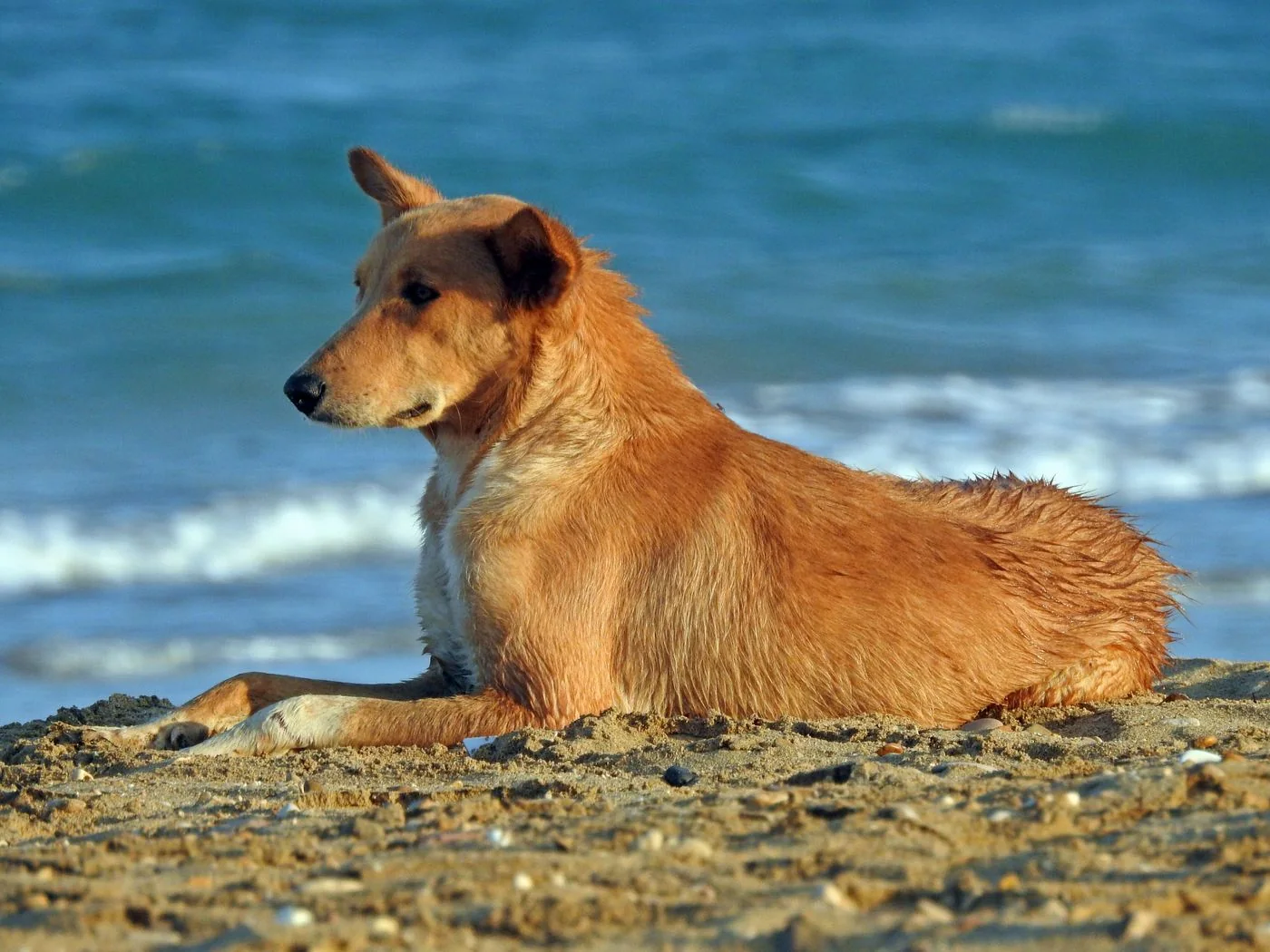
- Rest on a mat in shade with drinking water. Quietly watching the surroundings counts as time together too.
- Choose a shaded walking route instead if the beach is too loud, hot or stressful.
Turning ideas into calm activities
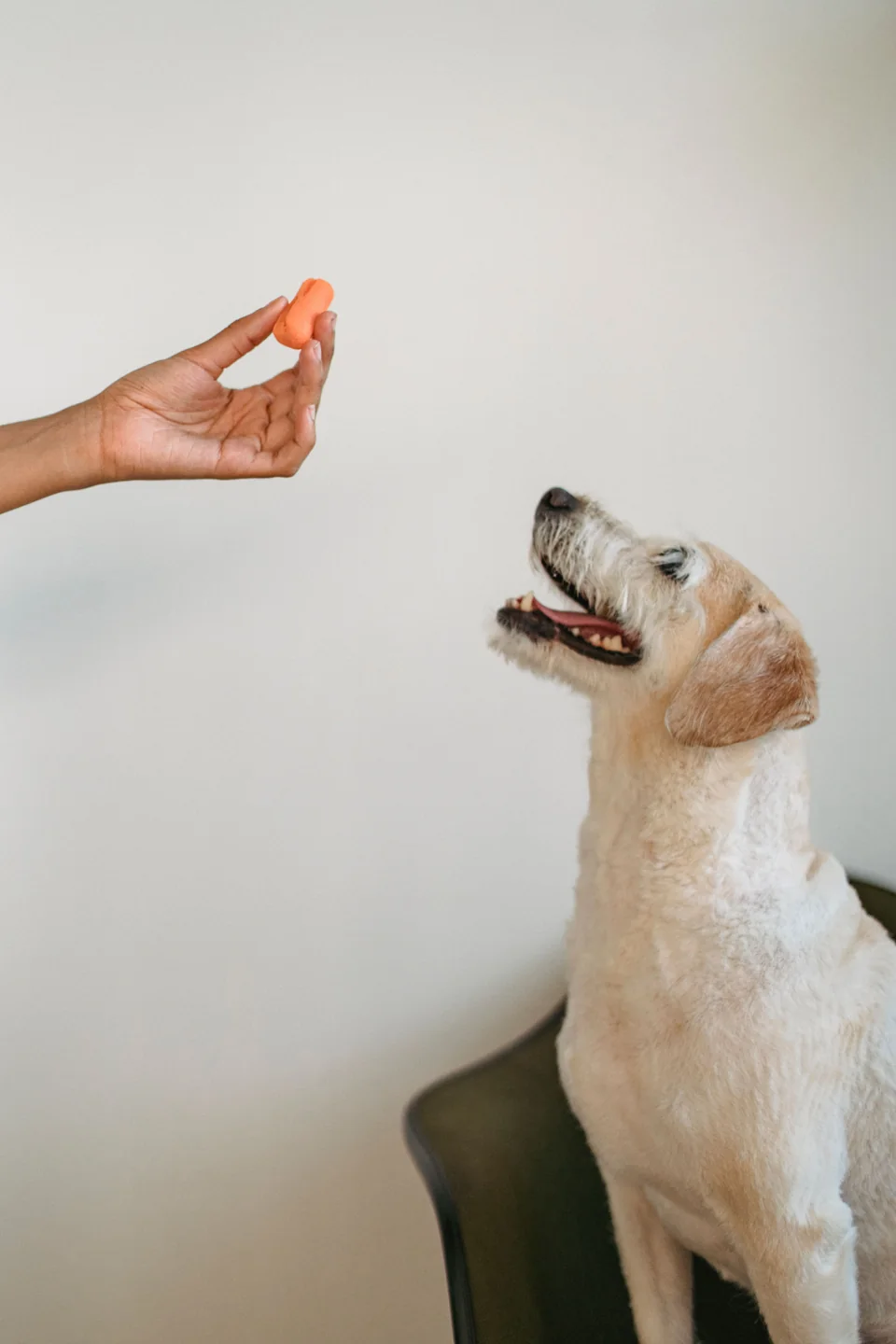
On a sniffing walk, follow your dog’s pace and allow pauses at safe smells. Avoid discarded food, dead animals and groups of birds. Do not scatter treats directly into the sand. For a short training exercise, deliver rewards from your hand or use a clean mat, and finish before the surroundings become too absorbing for your dog.
Choose a toy your dog can comfortably carry and check whether sand is sticking to it. Instead of a long series of throws, offer a brief shared game followed by a break. Do not demand stillness on the mat at any cost. If your dog keeps getting up, looks for an exit or cannot settle, change location or end the visit.
Let your dog choose whether to enter the water
Never throw a dog into the sea or pull it into the water. Not every dog can swim or enjoys waves. Choose a calm, safe shoreline and watch continuously. In strong winds, currents or high waves, stay on land.
Do not let your dog drink seawater. Offer fresh drinking water and regular pauses. Swallowed water, sand and scavenged scraps can cause health problems. Avoid endless throwing: a tired dog may keep trying to retrieve the toy.
An example day without hours on the beach
During a cool part of the day, plan a short walk and a chance to explore the shore. Afterwards, return to your accommodation for water, normal meals and rest in line with your dog’s routine. Spend the hot middle of the day somewhere cool. Assess conditions again in the evening: a later hour does not automatically mean a safe temperature or quiet beach.
This is an organisational example, not an exercise programme suitable for every dog. A senior dog, puppy or dog with health problems may need a different plan discussed with their vet. If your dog is resting happily with you away from the beach, another swim is not required to “make the most” of the trip. Leave space for weather changes and recovery.
What to pack and how to plan breaks
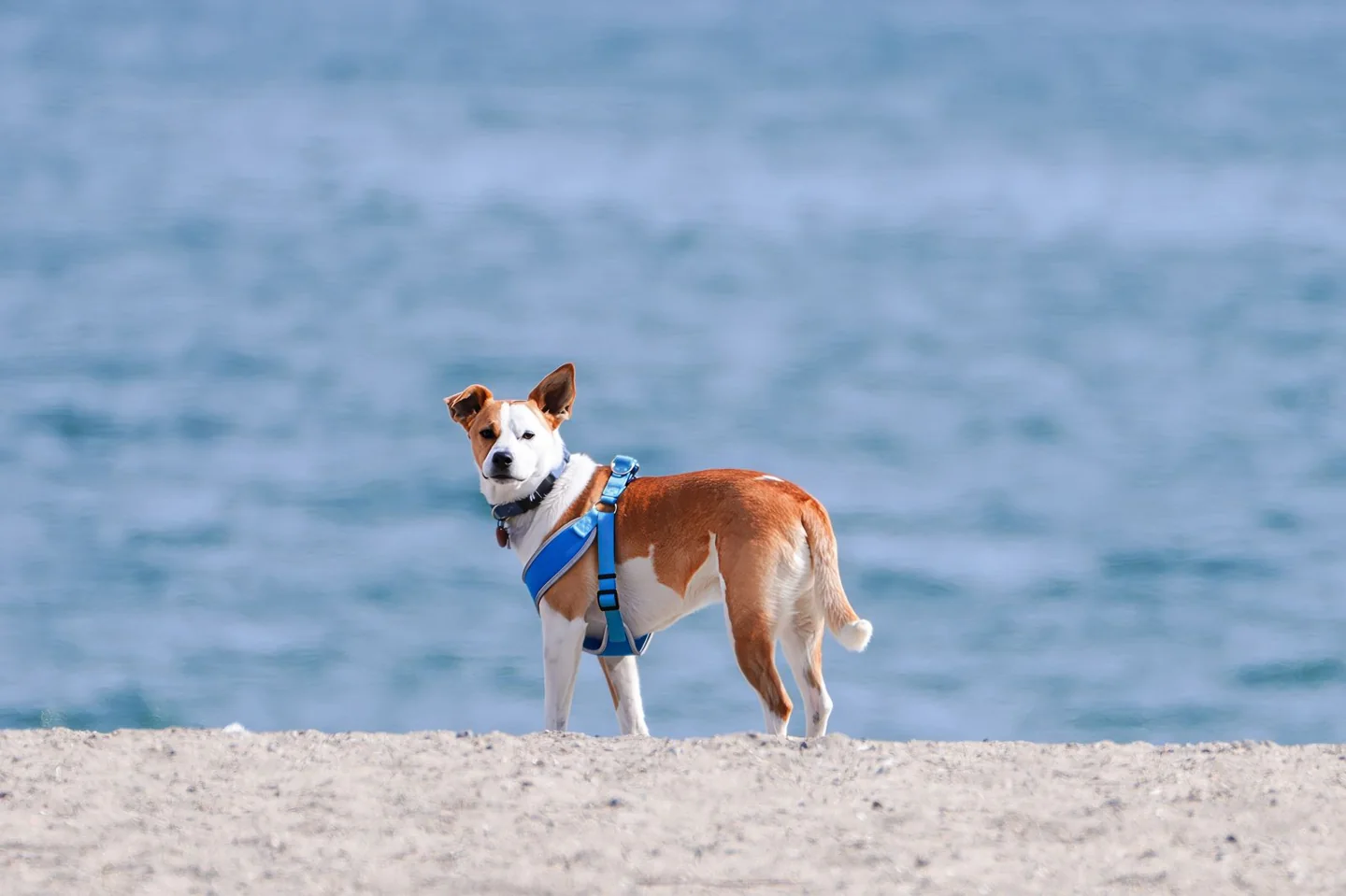
- Drinking water, a bowl, lead or suitable long line, a well-fitting harness and waste bags.
- A mat, towel and reliable shade. A parasol does not make every temperature safe.
- Current identification, your phone number and contact details for a nearby vet.
- Enough time to rest and leave before your dog becomes exhausted. Never leave the dog in a car.
When staying on land is the better option
Avoid entry points with sudden drops, difficult exits or heavy boat traffic. Do not take your dog through a crowd into the water just because they enjoyed swimming in a lake before. Waves and sea noise create different conditions.
A properly fitted life jacket can provide additional protection, but it does not replace supervision or make dangerous water safe.
Do not tether your dog at the water’s edge or leave them unattended while you swim. Keep lines clear of legs and obstacles. If your dog swims too far out or enters a strong current, do not risk your own life by jumping after them: call the lifeguards for help. Stopping a game early is better than attempting a rescue in deep water.
After the beach and warning signs
Rinse the coat with fresh water, dry your dog and check paws for sand, cuts and foreign material. Provide quiet rest. Vomiting, weakness, unsteadiness or seizures after time near water call for urgent veterinary advice.
Heavy panting, breathing difficulty and weakness may indicate overheating. Move the dog into shade, start cooling with water and contact a vet. Do not wait for symptoms to disappear. A crowded beach is no place to test a dog’s endurance.
Checking your dog afterwards and getting help
After rinsing with fresh water, inspect between the toes and underneath the harness. Gently remove loose sand without scrubbing irritated skin. If your dog limps, shows clear pain or has an embedded object, consult a vet rather than attempting deep cleaning yourself. Before another walk, make sure they have rested and are behaving normally.
If you suspect overheating, start cooling immediately while arranging veterinary help. Pour water over the body while keeping it away from the nose and mouth; do not force drinking or wrap your dog in a wet towel.
Tell the vet when symptoms began and whether seawater or sand may have been swallowed. Do not give human medicines or wait until the next day if your dog becomes weak or develops neurological signs.
Frequently asked questions
Are dogs allowed on every beach?
Do not assume so. Check the current rules for the particular entrance and season with the operator and on signs.
Does a dog need to swim to enjoy the trip?
No. Sniffing, gentle walking and rest are good activities in their own right. Do not force contact with water.
What if the trip would be difficult for my dog?
Consider care that preserves the usual routine. A quiet stay with a sitter may be a better fit than a noisy holiday.