Basket muzzles and fabric muzzles
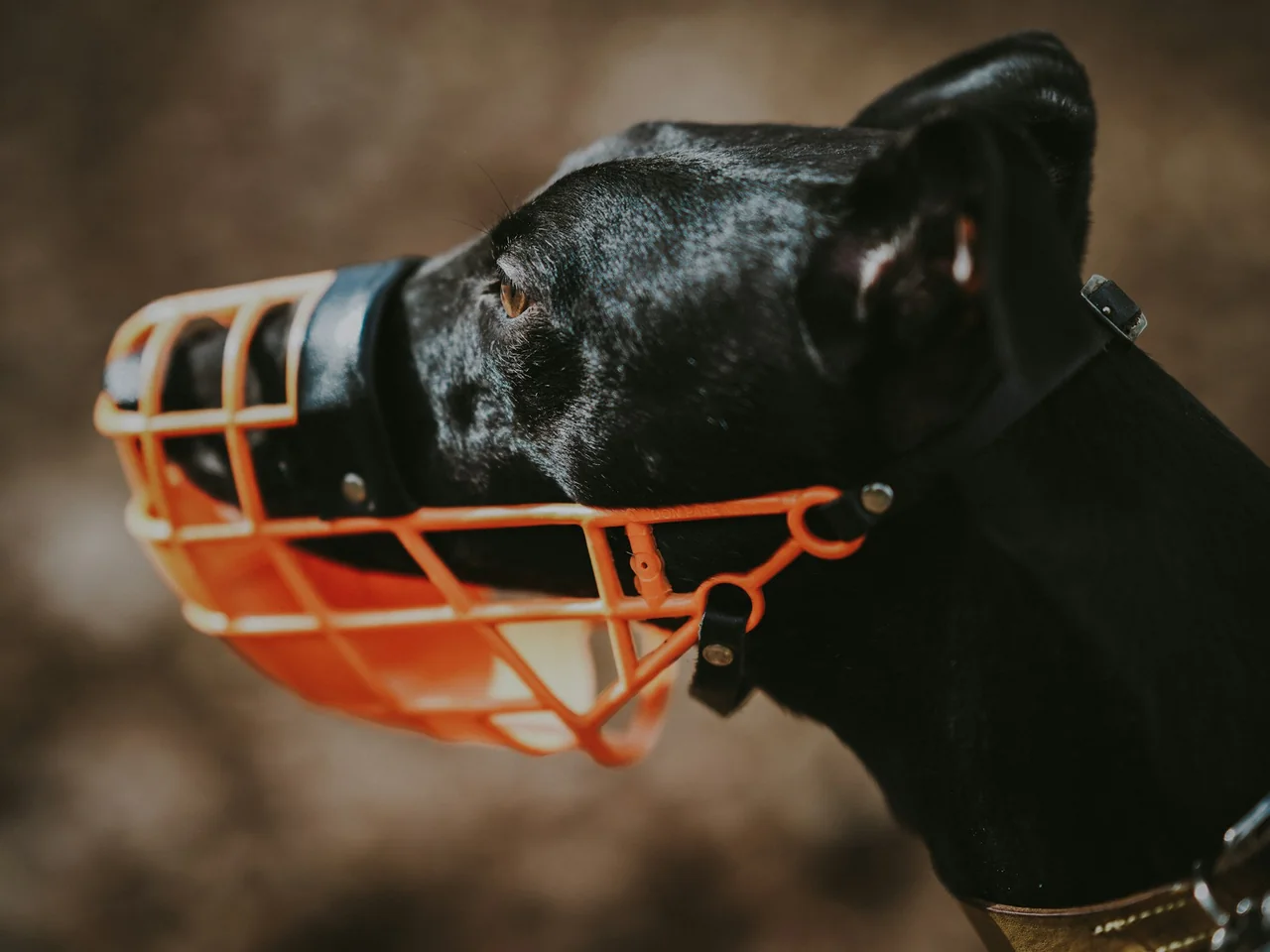
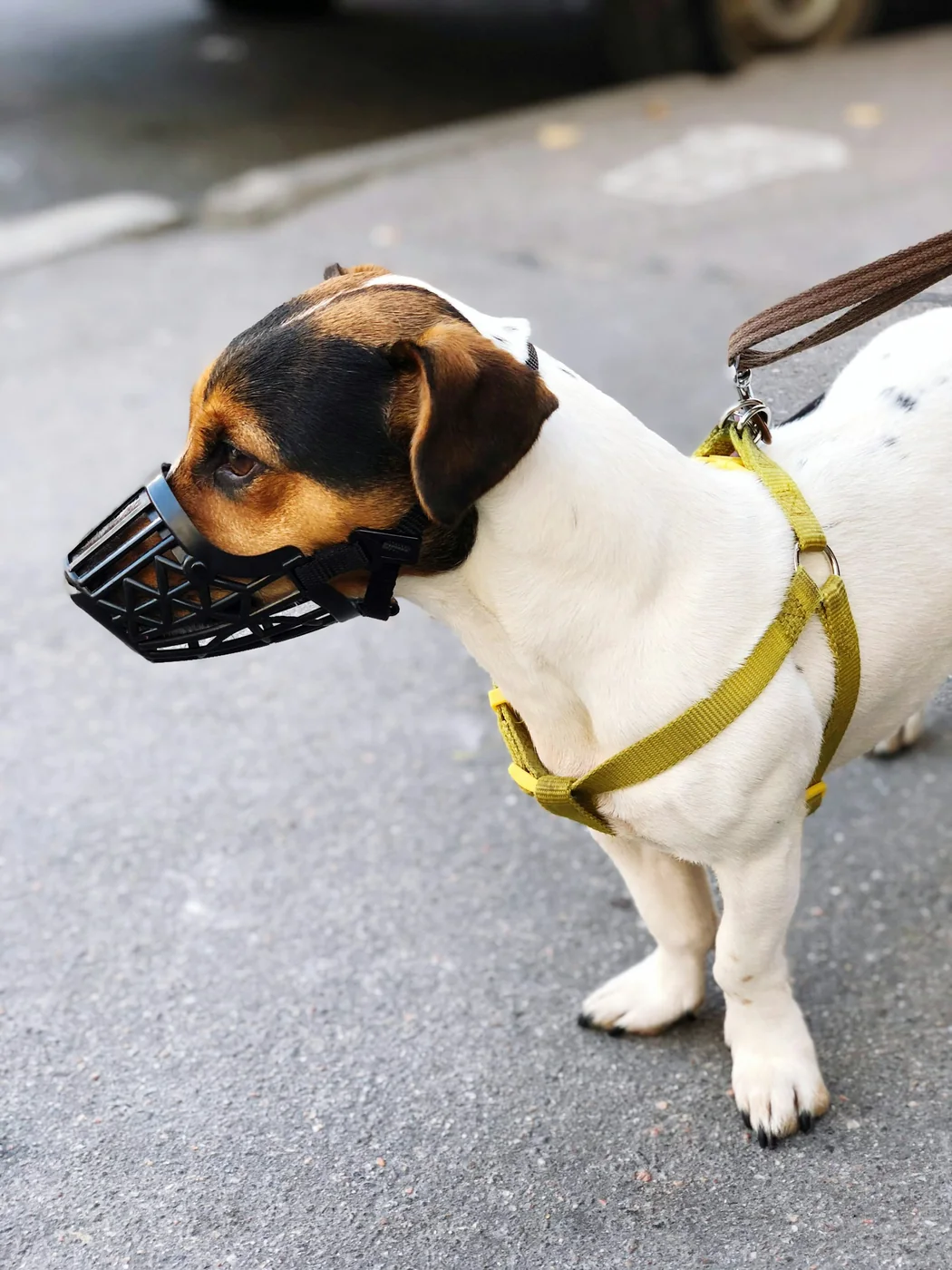
Baskets come in different materials; fit and intended use matter more than the name. A walking muzzle should allow breathing, panting and drinking. Check whether you can offer a reward too.
A soft sleeve that holds the mouth closed is not an alternative for walks: it restricts opening the mouth and losing heat. Such equipment has limited uses for short, supervised veterinary procedures.
How to check the size
- Measure following the manufacturer's instructions, but do not choose solely by breed. Check basket depth and space for opening the mouth too.
- Make sure the muzzle does not press on the nose, eyes or cheeks. Inspect contact areas after a short, calm trial.
- The strap should hold the equipment securely without pressure. Your dog should not easily paw it off; do not compensate for a loose basket by overtightening the strap.
- For a short muzzle, an unusual head shape or breathing problems, seek individual fitting advice. Another dog's photograph is not a fitting guide.
Introduce it step by step
Show the muzzle in a quiet place and reward voluntary interest. Next, let your dog put their nose inside for a reward; do not fasten the strap yet, and allow them to withdraw. Only when they willingly repeat this should you gradually extend the time inside.
Introduce strap contact and brief fastening separately. Add a few steps indoors before trying a quiet walk.
When to return to an easier step
Turning away, avoiding the equipment, freezing or repeatedly pawing it off means you should stop and check comfort. Shorten the trial, adjust the fit or go back to rewarding an approach. Do not hold your dog still to make them 'get used to it'.
Record a small next step rather than a deadline for wearing the muzzle. Seek help from a qualified reward-based professional if there is a bite risk.
What a muzzle cannot replace
It does not replace a lead, distance, supervision or work on the underlying behaviour. It is not for punishment, stopping barking or forcing interactions with other dogs. Do not leave a muzzled dog alone.
If your aim is to limit scavenging, check the construction: a dog can still pick things up through some baskets. Discuss newly developed swallowing of unusual items with your vet too.
Before travel or a walk with a sitter
Check the transport operator's conditions and local rules instead of assuming one requirement applies everywhere. Prepare the muzzle in advance rather than first introducing it on a station platform. Tell your sitter where it is kept, how it fastens and how your dog responds to fitting. Agree what to do if rubbing appears or breathing changes during a walk.
Frequently asked questions
Does a muzzled dog have to be aggressive?
No. A muzzle may be part of travel preparation, a veterinary visit or a safety plan. Do not judge a dog's temperament by equipment alone.
Should my dog be able to drink while muzzled?
Yes. A walking muzzle should allow drinking and unrestricted panting. Check this during a calm trial rather than on a long outing.
How long does muzzle training take?
There is no single timetable. Progress depends on comfort and previous experience. Move forward when the earlier step is calm and voluntary.