The best times to walk your dog are: in the morning after waking up, at midday (around 12-2 pm), in the evening (around 5-7 pm) and briefly before bed. In summer, move longer walks to early morning and late evening; in winter, to the warmest part of the day.
The timing of a walk matters as much as its length. The same hour-long walk can give your dog a lot or very little - depending on whether it comes after eight hours of waiting, in the worst of the heat or right after a big meal.
Below you will find rules to help you plan walks across the day, plus ready-made plans for an adult dog, a puppy and a senior.
The best times to walk your dog: how many times a day to go out
Most adult dogs need 3-4 outings a day, at least one of which should be a longer walk with time to sniff, not just a quick trip "to pee". Puppies and seniors usually need to go out more often, but for shorter walks.
The most important rule: the gap between outings should not be too long. An adult dog can hold on for longer, but that doesn't mean it should. Waiting for hours to relieve itself is stressful for a dog and a strain on its bladder.
We cover how long a single walk should last in the article How long to walk your dog.
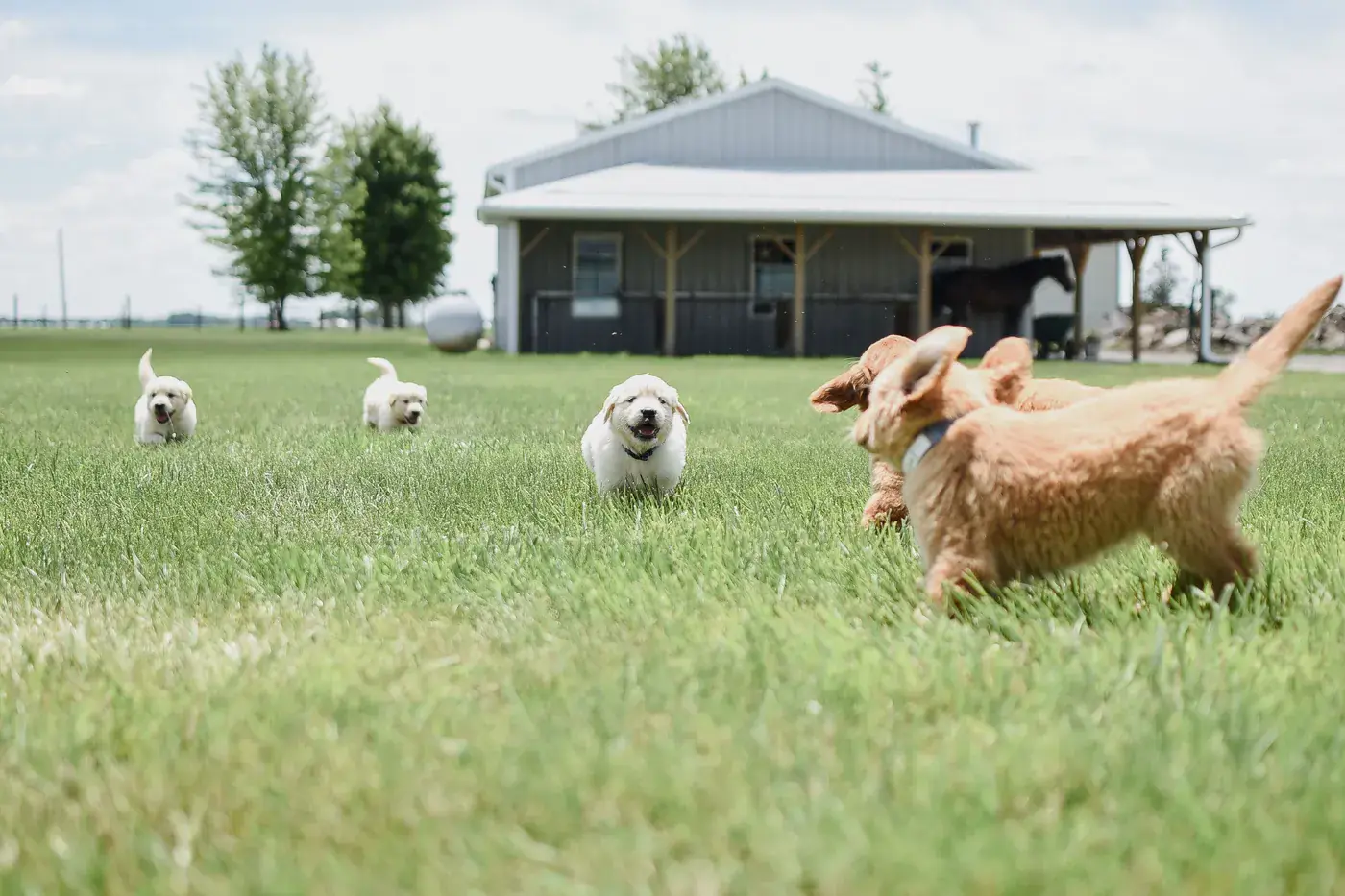
The morning walk - why and how long
In the morning your dog most needs to relieve itself - after a whole night it is urgent. It is also worth using the morning walk for some exercise and sniffing, because a calmer dog rests more easily when left alone at home.
- If you are short of time in the morning, 15-20 minutes of calm walking is better than 5 minutes outside the building.
- Active dogs (e.g. shepherds, huskies, hunting dogs) respond well to longer morning exercise - afterwards they are happier to sleep through the morning.
The midday walk - the one most often skipped
This is the walk that is most often missing. The owner leaves for work at 8 and comes back at 5-6 pm - and the dog waits 9-10 hours. Even if it doesn't leave puddles at home, a break like that is long for a dog.
A walk in the middle of the day:
- splits long hours alone into two shorter parts,
- reduces the risk of damage at home caused by boredom and frustration (more on this here),
- gives puppies a chance to learn house training without "accidents",
- matters for seniors and dogs that need to pee more often.
The evening walk and the last outing before bed
Many dogs are most active in the morning and evening - the evening is a good time for a longer walk, play or training. It is also worth planning a short outing just before bed, so your dog sleeps calmly through the night.
In winter the evening walk happens in the dark. Remember:
- a collar or harness with reflective elements, or an LED light,
- a reflector for yourself too,
- a quieter route - in the dark a dog is more easily startled by a sudden noise.
Ready-made daily plans
Adult dog, owner works in an office: - 6:45-7:15 am - walk with sniffing (20-30 min) - 12:00-2:00 pm - midday walk (30-60 min, e.g. with a sitter) - 5:30-6:30 pm - the longest walk, play, training - 10:00 pm - a short outing before bed
Puppy (3-6 months): - out straight after waking up, after every meal, after play and after a nap, - every 2-3 hours during the day, - short walks with plenty of rest - a puppy tires quickly.
Senior: - 4-5 shorter outings instead of 2 long ones, - a calm pace, even ground, more breaks, - avoid the coldest and hottest hours.
The season matters: winter and summer
Winter. The warmest part of the day is usually around midday - a good time for a longer walk, especially for short-haired, small and older dogs. In the morning and evening pavements can be icy and gritted with salt, so it is worth washing the paws in lukewarm water when you get back.
Summer. The opposite - avoid walks in the worst of the heat, usually from late morning to late afternoon. Plan long walks for early morning and late evening. Before going out, touch the tarmac with your hand - if it is too hot for you, it is too hot for your dog's paws too.
Walks and meals
After a big meal, don't take your dog for an intense run or wild play with other dogs. In large, deep-chested dogs (e.g. Great Danes, shepherds, setters) intense exercise straight after eating is one of the risk factors for dangerous gastric torsion.
It is safer to:
- go for a calm walk before the meal, or
- wait after eating before you start intense exercise.
A short trip out "to pee" after eating is fine - the point is to avoid heavy exertion.
Most important: regular times
Dogs like predictability. Regular walk times help with house training, calm anxious dogs and make it easier to stay home alone. You don't have to stick to the plan to the minute - what matters is that your dog knows the walk will definitely happen.
If your daily schedule leaves no room for a midday walk, an Alvis sitter can come at the same time several times a week. Every sitter goes through verification and training, and if a sitter can't come, we arrange a replacement.
Check dog walking in your city - Warszawa, Kraków, Wrocław, Poznań, Łódź, Gdańsk, Gdynia, Sopot.
Frequently asked questions
What is the best time to walk a dog in the morning?
Straight after waking up, when your dog needs to relieve itself. The exact time depends on your schedule - what matters more is that it stays roughly the same.
How many hours can a dog go without going out?
It depends on the dog's age, health and size. Adult dogs can often hold on for longer, but waiting for many hours is not good for them. If you work away from home all day, it is worth planning a midday walk.
Can I walk my dog straight after eating?
For a short, calm outing - yes. Intense exercise is better planned before the meal, or after a wait once your dog has eaten, especially in large dogs.
Is an evening walk in the dark safe?
Yes, if you and your dog are clearly visible (reflectors, an LED light) and your dog is on a lead in places where it might get startled.